About HESTIA
The Challenge
Improving the environmental sustainability of the agricultural system, while ensuring it delivers nutritious food for all, is an urgent global priority.
However, today, we lack important information to address this challenge:
- While huge amounts of data describing farms and their environmental impacts exist, very little is easily accessible. Most data sits in hard-to-access databases or in printed articles. This means we lack information about which products or production practices are most and least sustainable.
- What data are available tends to be incomparable due to the use of different data structures or different methods used to model environmental impacts. This makes it hard to share data or make reliable comparisons.
- And while farms and food producers are increasingly quantifying their environmental impacts, farmers are using different tools and methods, leading to different and incomparable results. It remains vague and unclear what "sustainable agriculture" is and how to achieve it.
Our mission is to provide the data and scientific models to enable consumers, farms, businesses, and policymakers to make informed decisions on how to consume and produce food in a more environmentally sustainable way. We are doing this by:

Providing a data standard to harmonise how agri-environmental data are shared between researchers and in supply chains.

Providing extensive, freely accessible data detailing the production practices and environmental impacts of food producers and products.

Providing open-source models to gap fill missing data, estimate emissions and resource uses, and quantify environmental impacts.

Testing whether our data and software supports behaviour change through trials with farmers in different countries worldwide.
HESTIA exists because a number of individuals and organisations - committed to improving agriculture's productivity and sustainability - came together to break down some of the hurdles in this area, including data exchange, model harmonisation, and farmer engagement.
HESTIA started in 2019 following the publication of Poore & Nemecek (2018) Science , with the aim of scaling up the data and modelling behind this research article and making it widely accessible.
We have invested in the long-term application of our data and models by basing everything on a new and highly detailed data standard. We have established long-term partnerships with a range of organisations in this area, essential to drive our vision to solve the vast and unprecedented sustainability challenges caused by the current food system. Our models use established and globally-recognised methods, including those from the IPCC and EEA guidelines, and our modelling approach prioritises transparency and reproducibility.
Our funding is either unrestricted (indicated with a star ) meaning our team decides how best to deploy the funds, or based on specific projects that our team develops and gets funded, often with input from the funder. To find out more about the specific projects, see theProjectssection below.
Primary Funder
 Since2021
Funders
 Since2019
 Since2023
 Since2024
 Since2019
 Since2023
 2022-2028
 Since2020
 Since2025
 2025-2028
 Since2026
 2026-2028
 Since2026
 2026-2029
Past Funders
 2024-2025
 2022-2025
Further Support
We primarily work through specific project funding, and the below list of projects reflects our project funding to date. We provide this list to give transparency on who is funding us and for what purpose, and also to provide information about the fascinating work we are lucky to do.
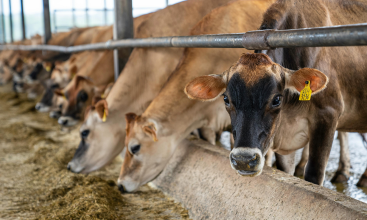
An open, global animal feed LCA database
2025 - 2027
We are building a new global LCA database on animal feed, making it free, public, and open. We are currently seeking two additional funders for this work. Our aim is to build this database collaboratively with those working on creating data in this area already.
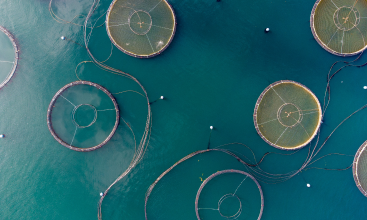
The sustainability of global aquaculture
2021 - 2028
This project is focused on growing data on the production practices and environmental impacts of aquaculture through both primary and secondary data. It is particularly focused on major species like tilapia, pangasius, and shrimp, and major producing countries like China and Vietnam.


LED4Food
Since 2023
This project, in partnership with WRAP, and supported by Foodsteps, looks at the environmental impacts of foods produced in - and imported into - the UK. It also looks digital technology can transform the food system. Our work directly supports the UK's Food Data Transparency Partnership.

Agribalyse expansion
Since 2025
We are working with the team at ADEME to provide data on major international crops for use in the Agribalyse LCA database, which is one of the most established food LCA databases.
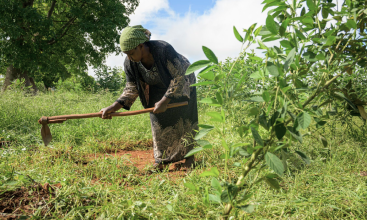
Farm Trials
Since 2021
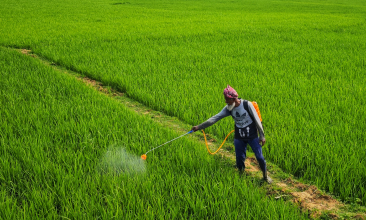
In this project, we are running experimental trials to test whether enabling farmers to quantify their environmental impacts and benchmark against peers changes their behaviour. We are specifically testing the effects of scalable digital tools - which use HESTIA data and models - in multiple countries.


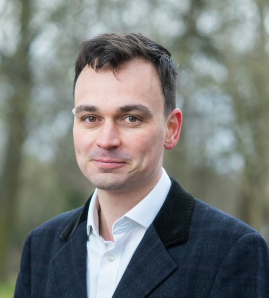 Joseph Poore
 Lead Researcher
Joseph founded HESTIA based on his 2018 Science paper and early input from colleagues. He oversees the project and has also built much of the data format, grown data volume, and created many of the models we use. He is Director of the Oxford Martin Programme on Food Sustainability where HESTIA is based.
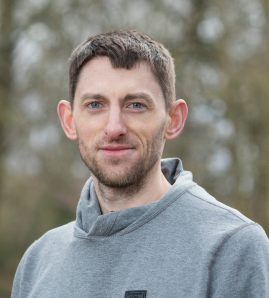 Guillaume Royer
 Lead Developer
Guillaume co-founded HESTIA in 2019 and has built much of the platform, designed much of the software architecture, and oversees software delivery. He leads the software development team.
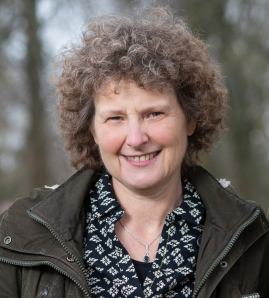 E.J. Milner-Gulland
 Advisor
Professor Dame E.J. Milner-Gulland is Tasso Leventis Professor of Biodiversity at the University of Oxford. She has been involved since the project's beginning and has supported and enabled the project to grow to where it is today. She oversees the project with Joseph and is particularly focused on the international farm trials.
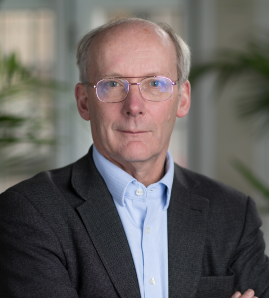 Charles Godfray
 Advisor
Professor Sir Charles Godfray is an expert on the global food system and how it will need to change and adapt to the challenges facing humanity in the 21st century. He has advised our team since the project's inception in 2019 and substantially supported us to grow our impact and reach.
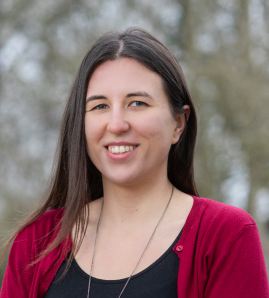 Valentina Caldart
 Data Lead
Valentina joined the team in 2020 and manages the flow of data onto the platform and oversees the data focused projects we work on. She has developed many of the glossaries we use, has worked on some of the largest datasets on the platform, and supports with the data aspects of our integrations.
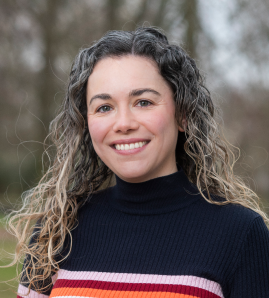 Harriet Bartlett
 Farm Trials Lead
Harriet leads the experimental farm trials where we are testing the effects of environmental impact data on changing farmer behaviour. She is working in (or managing teams in) Brazil, the UK, Vietnam, and Kenya. She started working with us in 2022 and started as Field Trials Lead in late 2023.
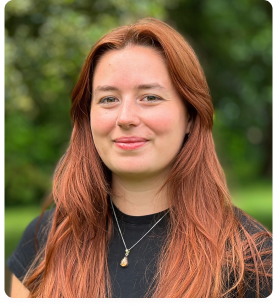 Juliet Telfer
 Technical Projects Lead
Juliet leads the delivery of our technical work with governments and NGOs, focusing on projects involving data science, statistics, and modelling. She joined the team in 2024. Before that she studied Physics at Oxford.
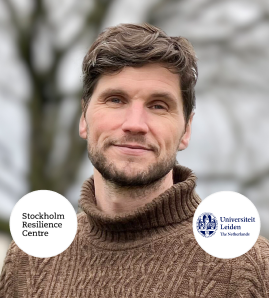 Patrik Henriksson
 Researcher
Patrik is based at Leiden University and helped design the project in 2019. He has contributed substantial data to HESTIA and supports our relationships with external partners. He is focused on aqua-culture, toxicity, un-certainties in LCA, and harmonisation of methods. Patrik also coordinates our field work in Vietnam.
 Lloyd Ashby
 Software Developer
Lloyd is a freelance Python developer who joined the team in 2024. He is focused on implementing a range of models on the HESTIA platform, including characterisation models under EU guidelines.
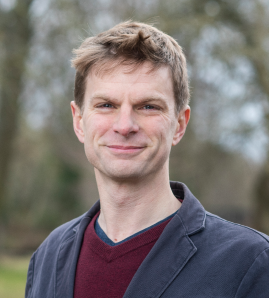 James Bradbury
 Software Developer
James is a software engineering consultant specialising in Python and software engineering processes. He has worked in healthcare, energy storage, and citizen science. He is working on improving and extending HESTIA model libraries as well as streamlining processes for software integrations.
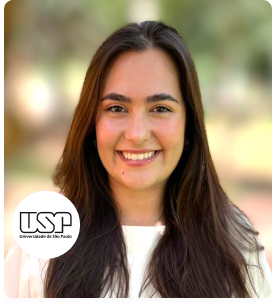 Giovanna Andrade Corrêa
 Researcher
Giovanna leads farm trials in Brazil, collaborating with pig farmers on field research. Based at the University of São Paulo, she uses environmental data to guide on-farm decisions. She joined in 2026 and improves farming practices through data collection and accessible tools.
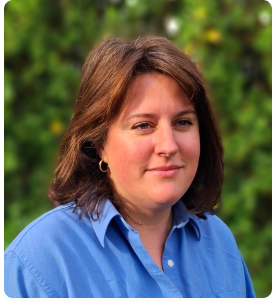 Fleur Delany
 Project Coordinator
Fleur joined as our Research Project Coordinator in 2025. She formerly worked as Head of Geography at secondary schools in the UK. She supports with project management, finance, administration, funding, and internal human resources.
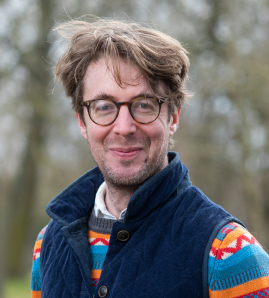 Sam Galson
 Product Manager
Sam is a part-time, freelance, Javascript developer with an increasing focus on improving HESTIA's product offer and user engagement. He joined the team in 2021.
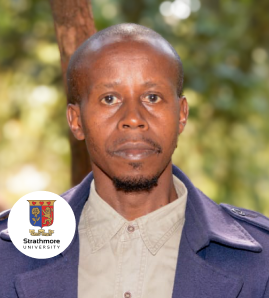 Edmund Githoro
 Researcher
Edmund works in Kenya on our Farm Trials work, engaging with farmers, collecting data, and analysing results. He has worked with our team since 2022.
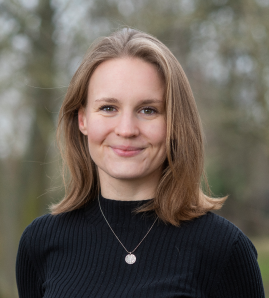 Alena Goebel
 D.Phil Student
Alena is a D.Phil student in the ICCS research group. Her D.Phil is focused on the sustainability of aquaculture in Vietnam. For this research she is using a mix of primary and secondary data and harmonising it using HESTIA.
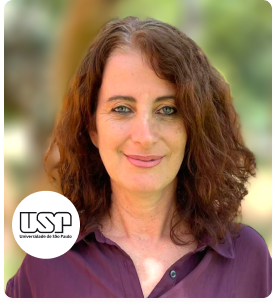 Márcia Inês Grapéggia Zanella
 Researcher
Márcia is based at the University of São Paulo, leading extension and engagement activities with pig farmers in Brazil. Her work improves on-farm practices through effective information transfer and accessible tools. She also plays a key role in developing and implementing the farmer toolkit for the RCT.
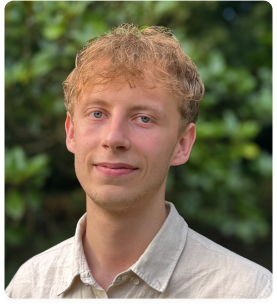 Elwyn Jones
 Data Analyst
Elwyn joined the project as a researcher in 2025. He works on the GRACE funded aquaculture project. Prior to that he worked on the Defra funded project on animal feed. He completed his M.Biol with the HESTIA team on salmon aquaculture.
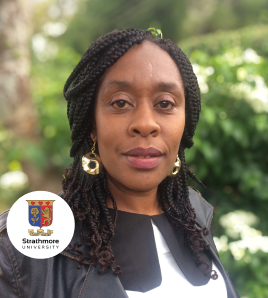 Alice Karuri
 Researcher
Alice is currently undertaking baseline data collection in Kenya, with a focus on maize farms. Depending on future funding, we may extend this to a field trial. She has a background in environmental and social sustainability assessment in coffee and tea in Kenya.
Ben Lambert Statistics Advisor
Ben is an Associate Professor of Statistics at the University of Oxford. He advises the HESTIA team on the use of statistical methods for processing and analysing the data we collect.
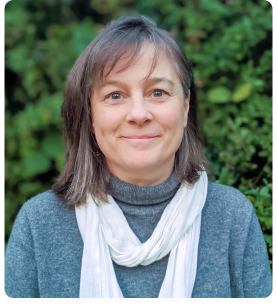 Emily Lewis-Brown
 Researcher
Emily is a Research Associate on the European farm trials. She is researching ways to help achieve sustainable agriculture using Randomised Controlled Trials and the HESTIA models of the carbon, water scarcity, eutrophication, biodiversity, and other impacts of agriculture.
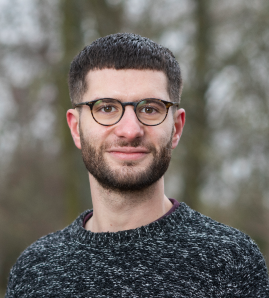 Florian Payen
 Data Analyst & Developer
Florian is a freelance analyst and developer working on soil carbon stock modelling and data for HESTIA. His PhD and post-doctoral work focused on building new soil carbon stock models for permanent crops. He is also interested in urban agriculture and its sustainability.
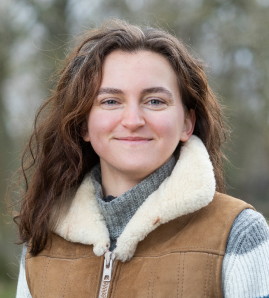 Lucy Walker
 Data Analyst
Lucy works on the Defra funded project with a focus on growing the volume of data on HESTIA describing the production practices and environmental impacts of foods imported into the UK. Prior to HESTIA, she worked as a farm advisor for Natural England.
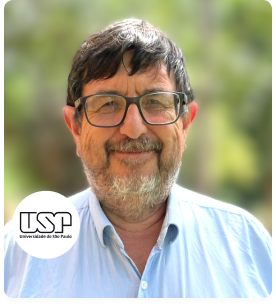 Adroaldo José Zanella
 Project Leader
Adroaldo oversees in-country activities and leads industry engagement. He brings decades of experience in animal welfare research. He is an expert in pig farming systems and has strong relationships with Brazilian producer groups and veterinarians. He coordinates the animal welfare research program at the University of São Paulo and supervises fieldwork, stakeholder recruitment, and the ethics process.
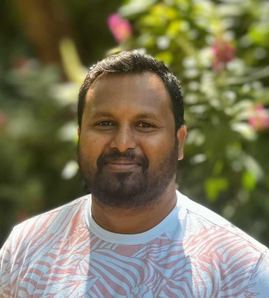 Vivek Arulnathan
 Postdoctoral Research Associate
Vivek is a Postdoctoral Research Associate focusing on the European farm trials. His is an LCA expert focused on delivering, and improving the effectiveness of, sustainability decision support capabilities for stakeholders in the agri-food sectors. Before joining HESTIA in May 2026, he spent seven years at UBC in Canada.
Upcoming Events
2026
No upcoming events yet.
Past Events
2026
17-21
2025
2024
2023
2022
2020
2019
Photo Credit: John Cairns , Bob Brewer , Prakasit John Khuansuwan (JohnStocker) , Kelvin Trautman , Rafa Prada , Red Zeppelin , Shelley Pauls , Warren , Arseni Mourzenko .
HESTIA is delivered through the Oxford Martin Programme on Food Sustainability. We are part of the ICCS research group in the Department of Biology, University of Oxford. We also have team members based at Leiden University and at the NGO WRAP. We are an international team, from countries across Europe and around the world.